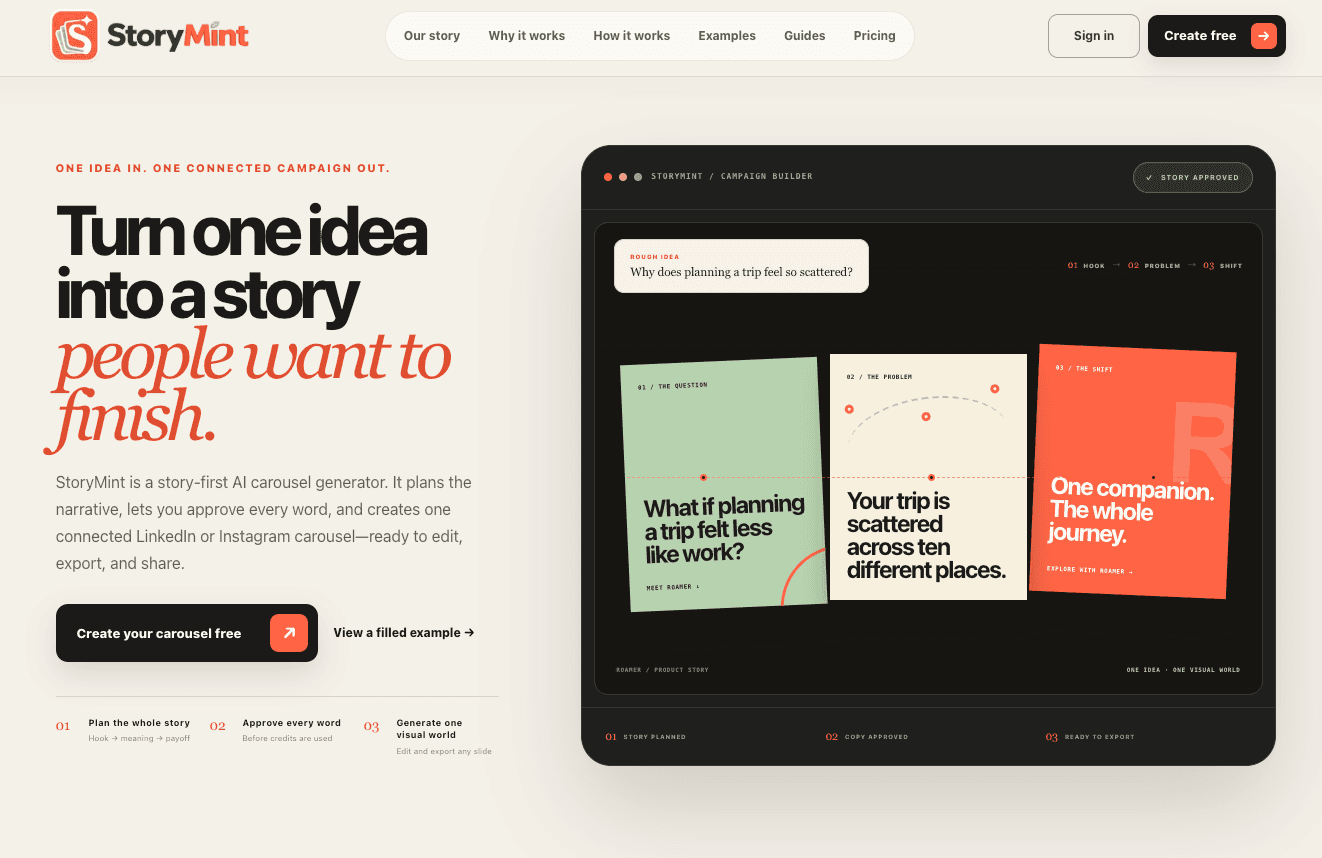
I found the problem, shaped the product, designed the experience, and built it end to end.
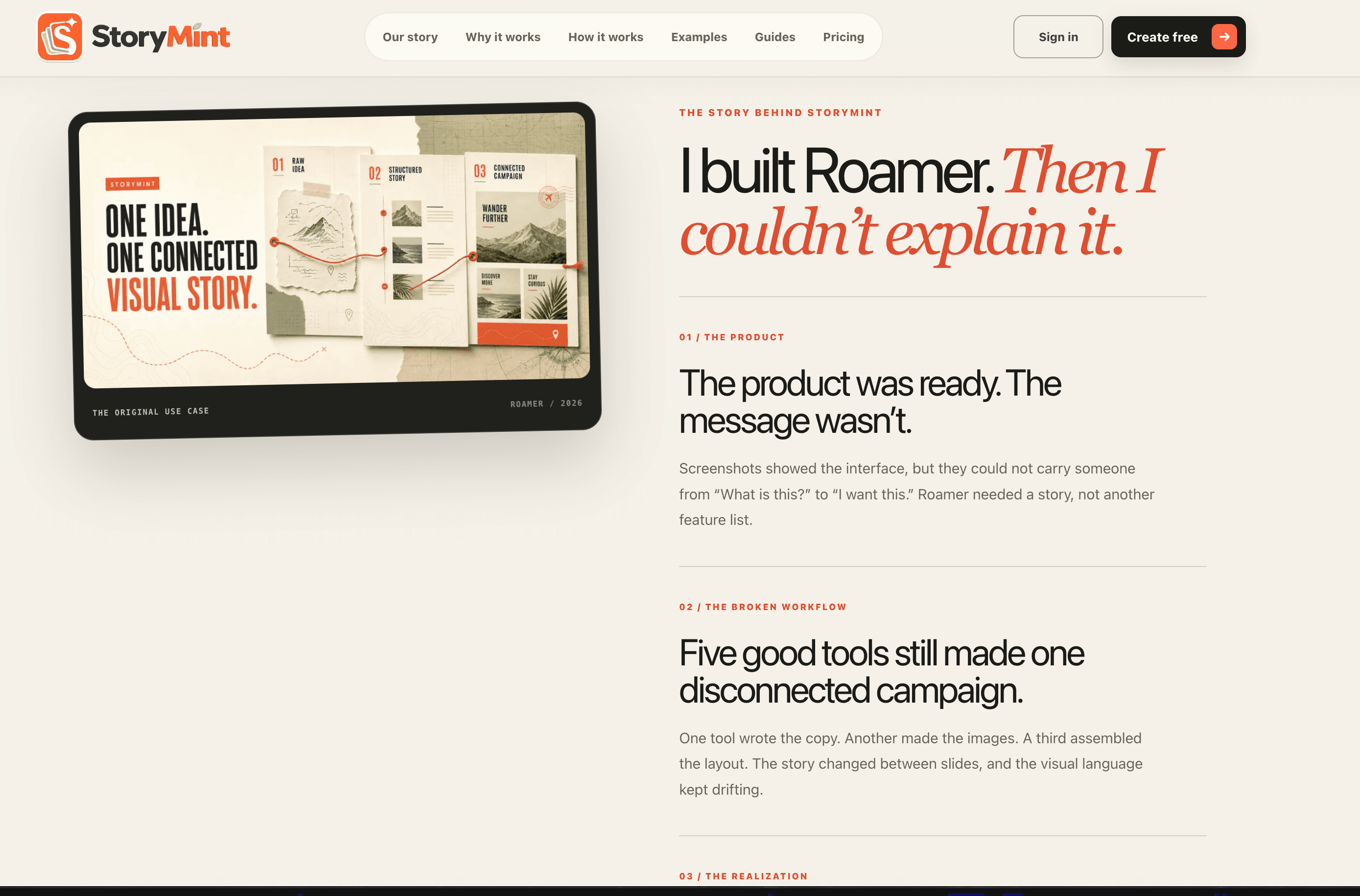
I built Roamer. Then I couldn’t explain it.
The product worked, but screenshots only showed the interface. They could not carry someone from “What is this?” to “I want this.” Roamer needed a connected story—not another feature list—and that problem became the seed of StoryMint.
Five useful tools still made one disconnected campaign.
Research happened in one place, writing in another, images somewhere else, and layout at the end. The story changed between slides, the visual language drifted, and creators often spent credits before they knew whether the message was right.
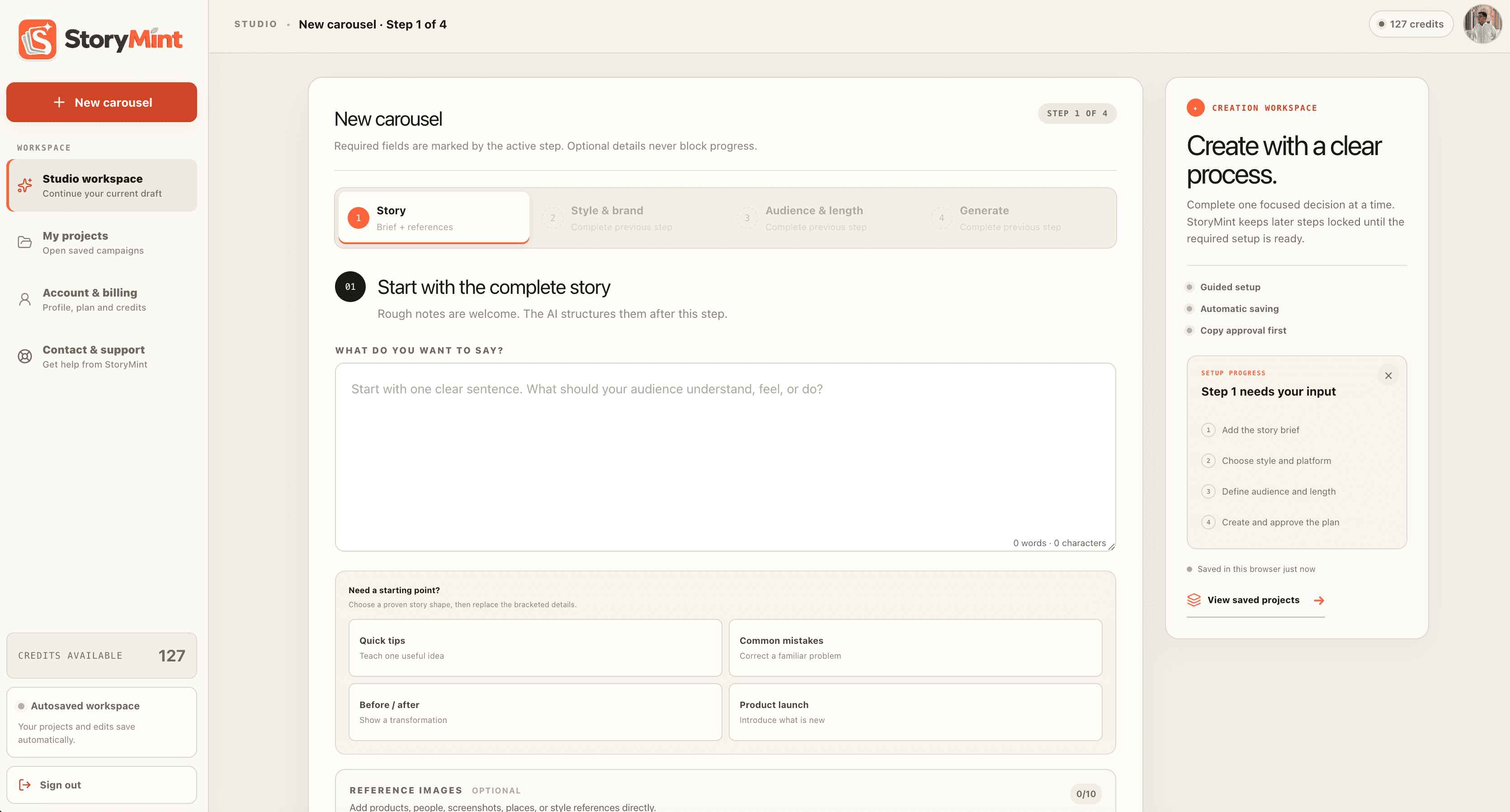
Approve the narrative before generating the art.
StoryMint plans the whole message first. The creator can shape the audience, length, voice, and every slide before visual generation begins. That single decision makes the product feel deliberate: fewer surprises, less waste, and a clearer campaign from hook to payoff.
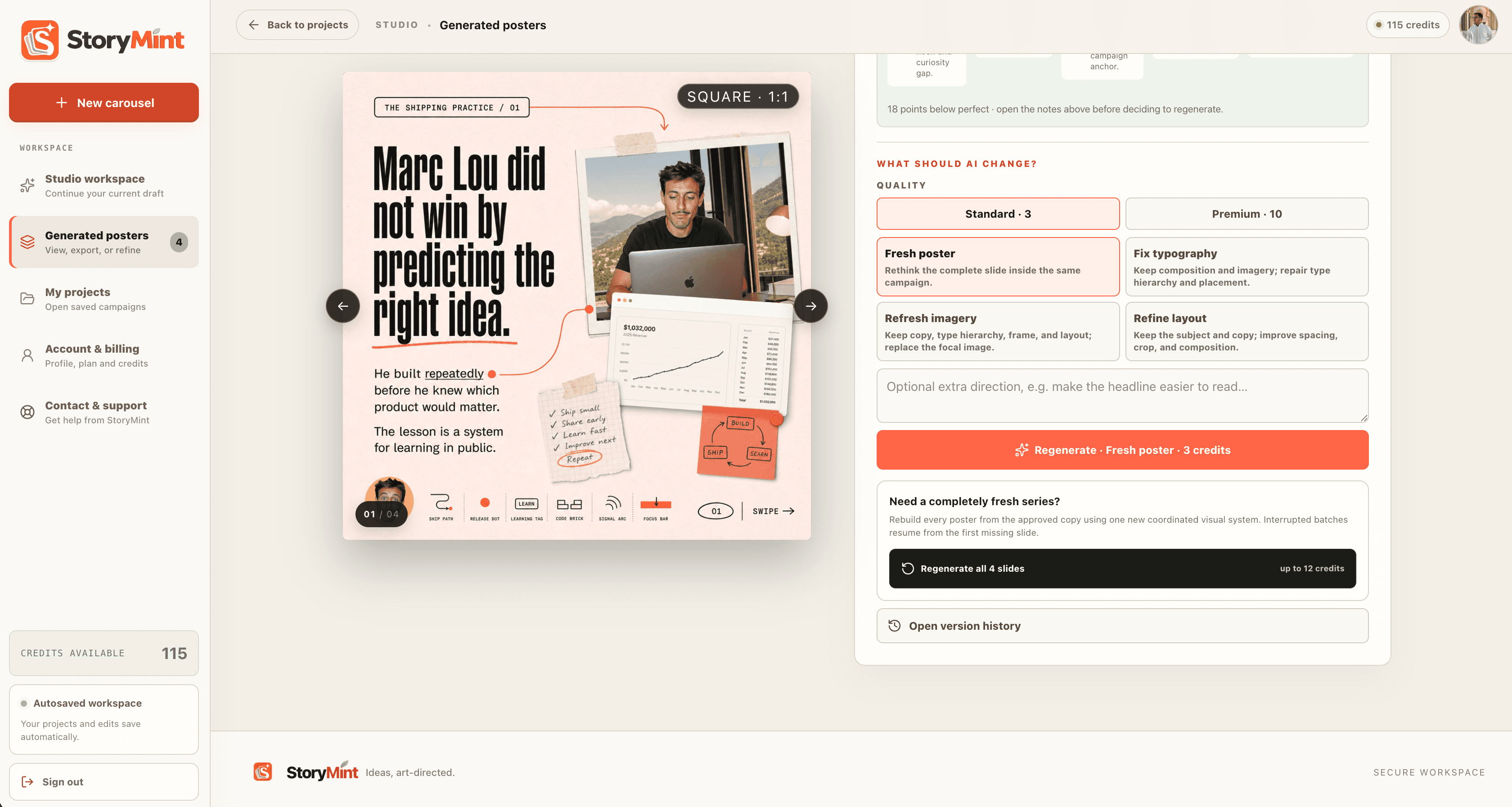
The first approved poster becomes the campaign’s visual anchor.
Instead of treating each slide as an isolated generation, StoryMint carries the approved art direction across the series. Individual posters can still be refined or regenerated, while the campaign keeps its voice, rhythm, and recognisable visual character.